

CLEANING INSTRUCTIONS FOR VINTAGE CLOTHING…

vintage pics

Acetate: Dry clean, or machine or hand wash at a cool temperature. Do not wring when wet or put through spin cycle in washer. Hang or dry flat (do not tumble dry). Iron while damp at a cool temperature.

Polyester: Most items made from polyester can be machine washed and dried. To wash use warm water and add a fabric softener to the final rinse cycle. If ironing is required, use a moderately warm iron.

Acrylic: Machine wash. Hang or dry flat. Iron at a cool temperature.

Corduroy: Wash as per material (usually cotton), turning inside out. Leave inside out for ironing and iron at cool temperature.

Cotton: Separate lights & darks and machine wash. Iron at a cool temperature.

Denim: Wash as per cotton, but wash it alone the first time so that dye does not stain other clothing. Turn inside out to discourage fading. Hang dry to avoid shortening and shrinkage.

Leather: Send to specialist dry cleaner.

Nylon: Wash by hand or machine at a cool temperature with similar colours. Nylon’s natural hue is grayish and it will revert if mislaundered. Special nylon whiteners can be purchased at the supermarket. Iron cool.

Rayon: If washing instructions are missing, dry clean only. Wash at a cool temperature. Iron cool.

Silk: Dry clean or hand wash in cool water with Stergene or a similar gentle product. Do not rub or a chalky bloom may arise due to broken filaments. Hang or dry flat. Take care with spot cleaning, as this may leave rings. Shirts and blouses should be steamed or ironed on a cool temperature.

Suede: Dry clean only. Protect with suede protector spray once back from the cleaner.

Wool & cashmere: Dry clean or hand wash. Wool may be damaged by traditional soaps and detergents — it’s better to use Stergene or baby shampoo. Put wool through the washing machine or tumble dryer only on settings specifically designated for this fibre. If wrinkled, hang dry woollens in steamy bathroom. Hot water will shrink wool.

HOW TO FIND THE RIGHT VINTAGE CLOTHING TO SELL FOR A PROFIT…

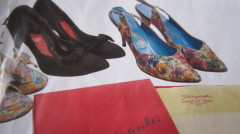
Vintage SHoes

People are always on the look out for great bargains. So it’s important to regularly check your local vintage clothes goldmine to see if any new stock has come in that could potentially make you some money.

Check out your local charity shops and don’t be afraid to rummage. The chances are that the most collectable items lurk at the bottom of the pile.

Also, keep going back to any shop and get to know the staff so that they know what you are looking out for. Maybe even leave your contact details so they will let you know when something special comes in.

Look for items that are made of high quality fabrics such as wool or cotton. Don’t worry if an item has a small hole, is missing a button or needs to be hemmed up, this can all be easily fixed.

Don’t spend much as there aren’t any items of clothing in particular that make the most profit, its more about the condition, the label and how limited the availability of the item is. There are plenty of books out there on shopping for vintage.

Although big names generally sell for more money, it’s much more difficult to find them for just a few quid. Because of this, you’re better off sticking to lower priced items to begin with.

Charity shops are a great place for vintage bargains. There are also some fantastic online shops such as somelikeitvintage that have amazing bargain items.

There are literally thousands of collectors out there searching for certain items. They are willing to pay big money for the vintage designer shoe.

Some well known sites to sell them on are ebay, asos marketplace, and specialist auctions or of course at your local vintage fair.

SOME 1950’s TIPS FOR CLEANING …

Home is where the heart is

Use baking soda to clean your sink.

To remove rust stains, rub with lemon juice, then rinse.

Put talc inside your rubber gloves, it makes them easier to get on and off.

To remove water marks on wood put some mayonnaise on a soft cloth and rub.

To remove candle wax warm a knife over a candle flame then use it to lift the wax.

To remove candle wax from clothes cover with brown paper and run a warm iron (switched off) over it.

To remove candle wax from a candle stick or similar use a hair-dryer.

Use a walnut to rub out marks on wood.